
Amir's Journey from Cowardice to Redemption
The Kite RunnerTraces Amir's transformation from a guilt-ridden boy who betrays his half-brother to a man who risks his life to rescue Hassan's son and atone for his past.
increasing Bearing strength in each event
 decreasing
Bearing strength in each eventdecreasingThe Betrayal in the Alley
The Betrayal in the Alley
The Moment of Choice
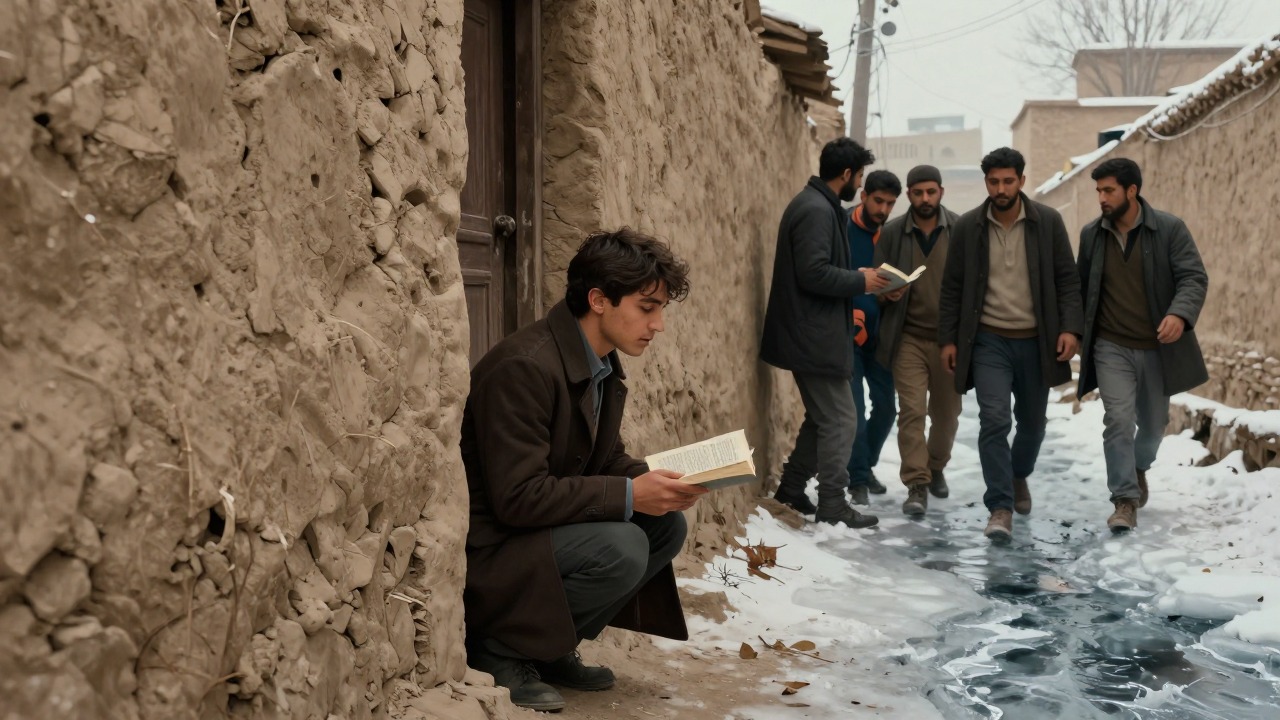
On a frigid overcast day in the winter of 1975, twelve-year-old Amir crouches behind a crumbling mud wall, peeking into an alley near a frozen creek. He witnesses his loyal friend Hassan being cornered by Assef and his gang. Hassan has just run the last kite for Amir, a blue kite that represents Amir's chance to win his father's approval. Assef demands the kite, but Hassan refuses, clutching it as a trophy for Amir. The tension escalates as Assef slips on his stainless-steel brass knuckles.
The Failure to Act
Amir stands paralyzed, torn between intervening and running away. He recalls Hassan's unwavering loyalty, the slingshot that once saved them from Assef, and the countless times Hassan defended him. Yet fear of Assef's brutality and a deeper, darker thought—that Hassan is merely a Hazara servant—overwhelms him. He turns and runs, leaving Hassan to be raped. This moment becomes the defining sin of Amir's life, a wound that festers for twenty-six years.
The Weight of Guilt
After the assault, Amir pretends nothing happened. He wins the kite tournament and finally earns Baba's praise, but the victory feels hollow. He becomes an insomniac, haunted by the image of Hassan's brown corduroy pants discarded on bricks and the blood staining the snow. His guilt manifests in cruelty: he taunts Hassan, pelts him with pomegranates, and eventually frames him for theft to drive him away. The betrayal severs the bond between them and sets Amir on a path of self-loathing.
Framing Hassan for Theft
Framing Hassan for Theft
The Desperate Plan
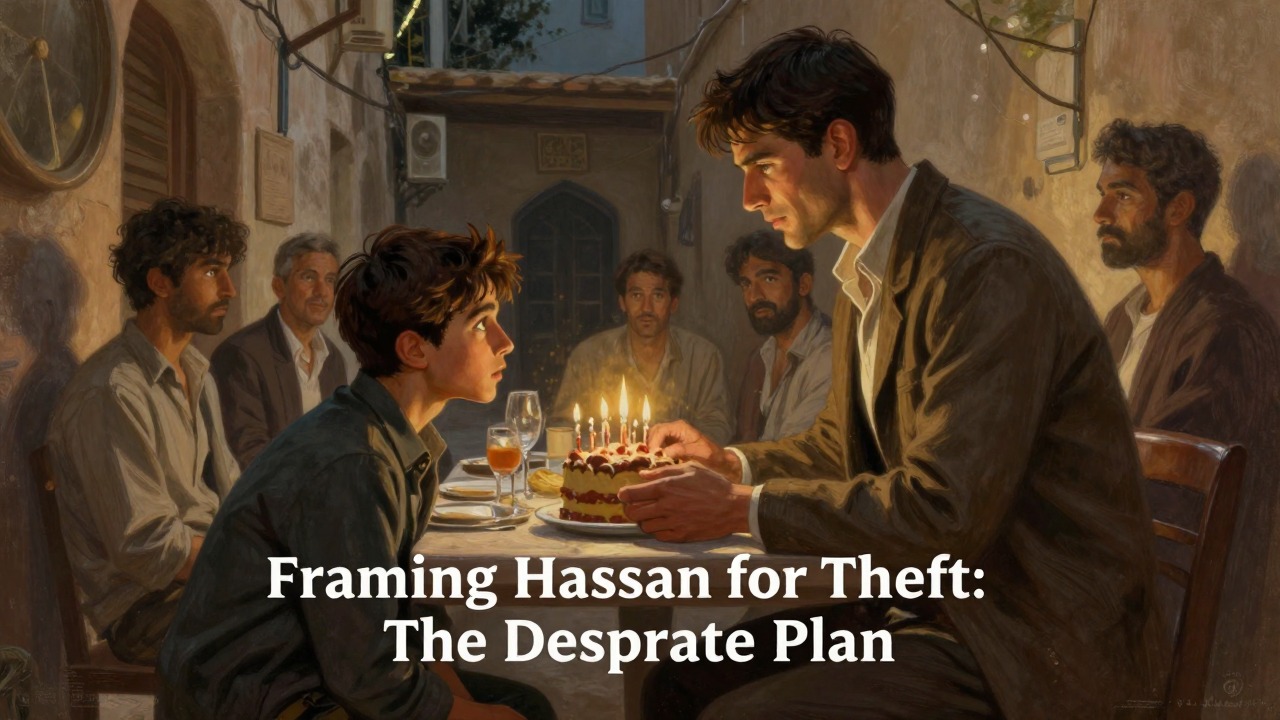
A year after the alley, Amir's guilt has become unbearable. He cannot bear to see Hassan's unwavering loyalty, which only reminds him of his own cowardice. On his thirteenth birthday, after a lavish party, Amir decides to force Hassan and Ali to leave. He plants his new wristwatch and a handful of Afghani bills under Hassan's mattress, then tells Baba that Hassan has stolen them.
The Confrontation
Baba summons Hassan and Ali to his study. When Baba asks if Hassan stole the money, Hassan looks at Amir and, in a thin, raspy voice, says "Yes." Amir flinches, expecting Baba's wrath—theft is the one unforgivable sin in Baba's code. But Baba, to Amir's shock, forgives Hassan. Ali, however, knows the truth. He sees the betrayal in Amir's eyes and announces that they are leaving. Baba pleads, but Ali is resolute. They pack their belongings and leave in a rainstorm, taking with them the person whose first word was "Amir."
The Aftermath
Amir watches from his window as Baba's car pulls away, carrying Hassan slumped in the back seat. He feels a momentary relief, but it quickly curdles into a deeper emptiness. He has successfully driven away the living reminder of his sin, but in doing so, he has also lost the only person who loved him unconditionally. This act of betrayal sets the stage for decades of unresolved guilt and the eventual quest for redemption.
The Call from Rahim Khan
The Call from Rahim Khan
An Unexpected Summons
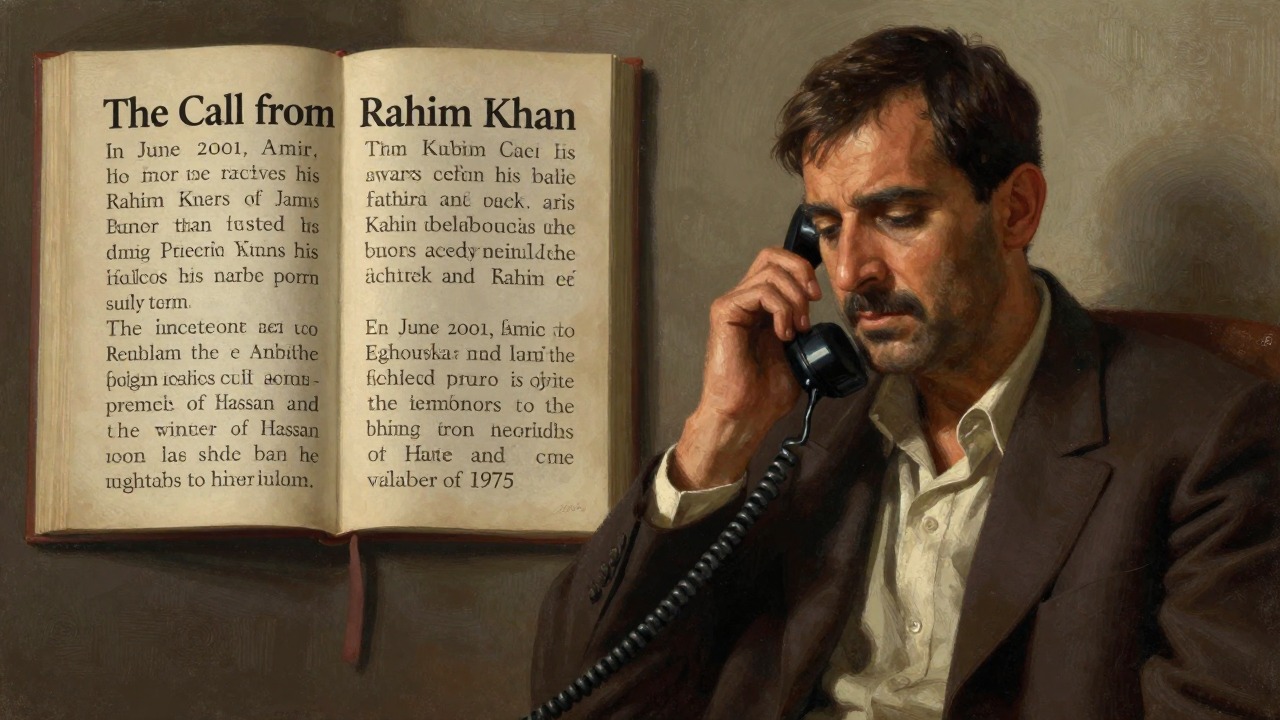
In June 2001, Amir receives a phone call from Rahim Khan, his father's old friend and mentor. Rahim Khan is dying in Peshawar and asks Amir to come see him. The call stirs up buried memories of Hassan and the winter of 1975. Rahim Khan's parting words—"There is a way to be good again"—echo in Amir's mind. He knows this is a summons to confront his past.
The Journey to Pakistan
Amir leaves his comfortable life in San Francisco, his wife Soraya, and his writing career. He flies to Peshawar and finds Rahim Khan in a small, dim apartment. Rahim Khan is emaciated, coughing blood. He tells Amir about the Taliban's atrocities in Kabul, the destruction of Baba's orphanage, and the fate of Hassan. Then he reveals the truth: Hassan was not Ali's son, but Baba's. Amir and Hassan are half-brothers. The revelation shatters Amir's understanding of his father and himself.
The Mission
Rahim Khan asks Amir to go to Kabul and rescue Hassan's son, Sohrab, from an orphanage. The Taliban have killed Hassan and his wife Farzana, and Sohrab is alone. Amir initially refuses, citing the danger and his life in America. But Rahim Khan's words—and the weight of his own guilt—compel him. He realizes that this is his chance to atone for his betrayal of Hassan. He agrees to go, setting in motion a perilous journey into the heart of Taliban-controlled Afghanistan.
Rescuing Sohrab from Assef
Rescuing Sohrab from Assef
The Confrontation with Assef
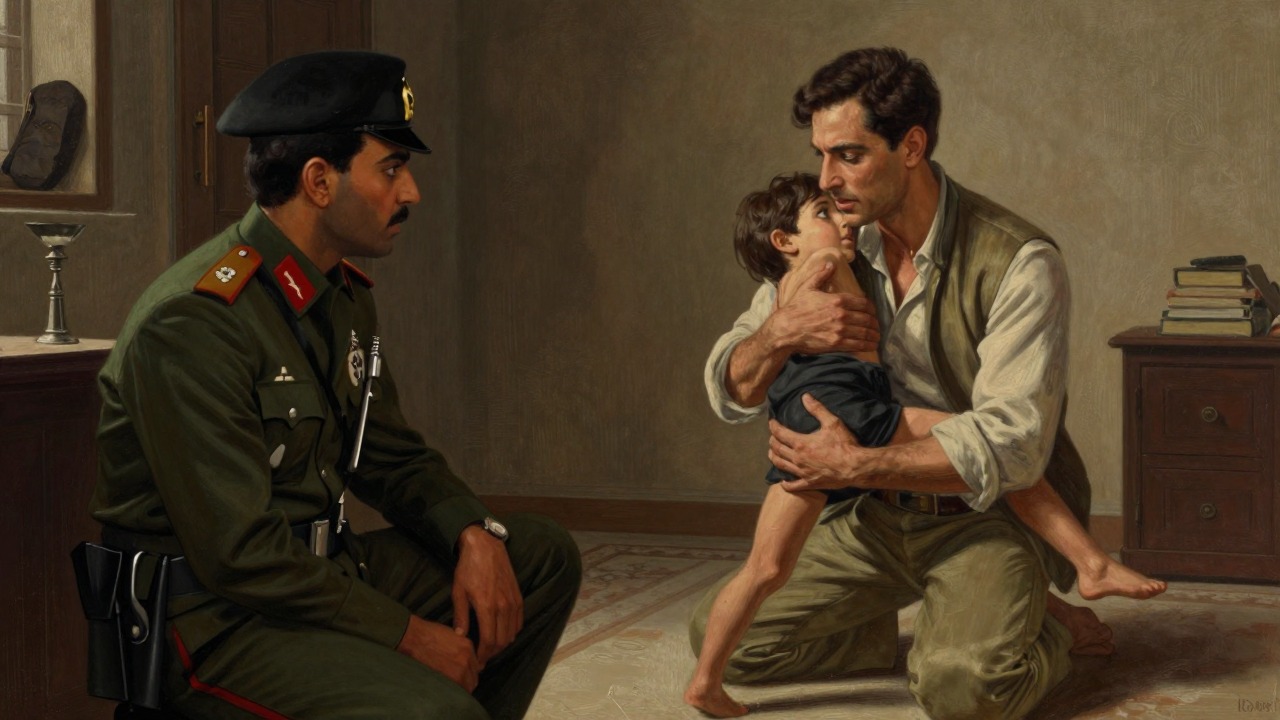
Amir, guided by Farid, locates Sohrab in the home of a Talib official. The official is none other than Assef, now a high-ranking Taliban commander. Assef recognizes Amir immediately and mocks him. He has been using Sohrab as a dancing boy, dressing him in mascara and bells. Assef offers to let Amir take Sohrab—if he can survive a fight. He slips on his brass knuckles and beats Amir mercilessly, breaking his ribs, jaw, and puncturing his lung.
The Turning Point
As Amir lies on the floor, broken and bleeding, he begins to laugh. For the first time since 1975, he feels at peace. His laughter enrages Assef, who continues to beat him. But Sohrab, watching from the corner, takes out his slingshot—the same weapon Hassan once used to defend Amir. He loads a brass ball from the table and shoots Assef in the eye, blinding him. Assef screams in agony, and Sohrab helps Amir escape.
The Escape
Farid drives them out of Kabul as Assef's men give chase. Amir passes out from his injuries. He wakes up in a hospital in Peshawar, his jaw wired shut, his body mended. Sohrab is by his side. The fight has physically broken Amir but spiritually healed him. He has finally stood up for someone, just as Hassan once stood up for him. The rescue is the first step in his redemption, but it also leaves Sohrab deeply traumatized.
Adopting Sohrab and the New Beginning
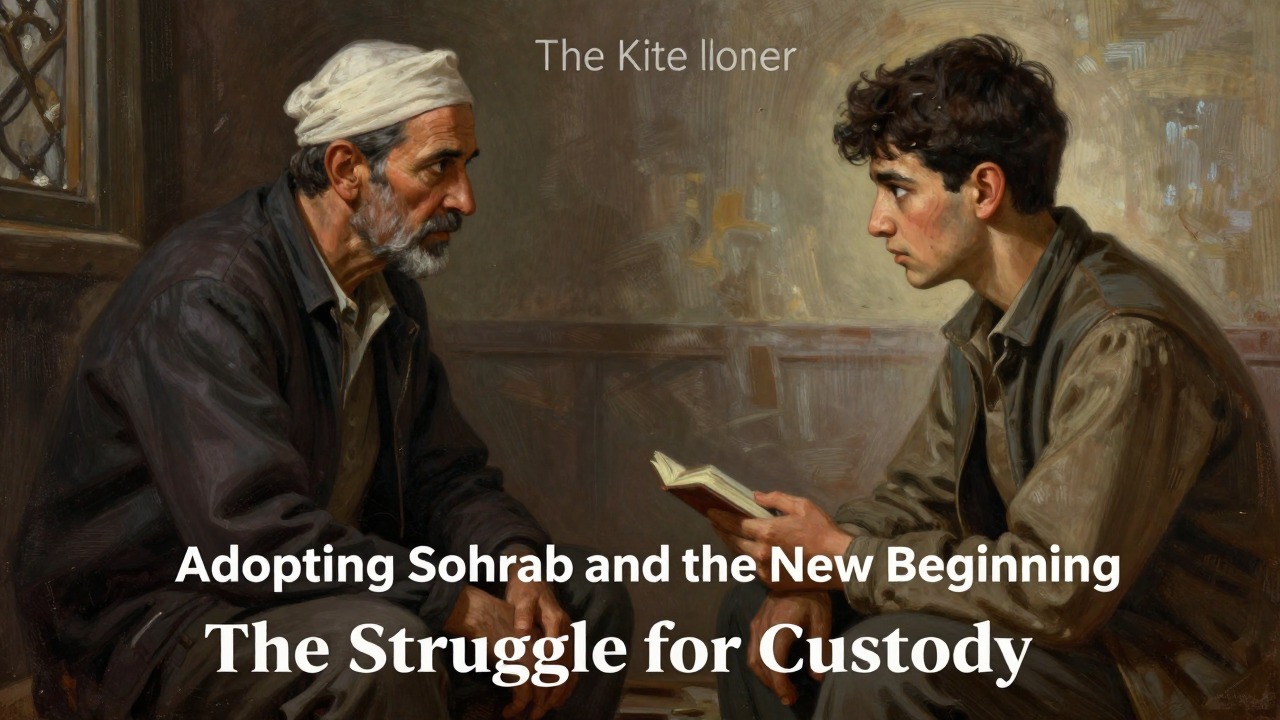
Adopting Sohrab and the New Beginning
The Struggle for Custody
After the rescue, Amir faces immense bureaucratic hurdles to adopt Sohrab. The INS requires proof of orphan status, which is impossible in war-torn Afghanistan. Sohrab, traumatized by his abuse and the suicide attempt that follows, falls silent. He barely speaks or interacts. Amir and Soraya bring him to their home in San Francisco, but Sohrab remains withdrawn, sleeping most of the time and showing no emotion.
The Slow Healing
Months pass. The world changes after 9/11, and America bombs Afghanistan. Amir becomes involved in Afghan refugee projects, but Sohrab's silence weighs on him. He feels he has failed Hassan again. Then, on a rainy day in March 2002, at an Afghan New Year gathering in Fremont, Amir buys a kite and asks Sohrab to help him fly it. Sohrab follows him, and when Amir cuts down a green kite using Hassan's old trick, Sohrab's lips curl into a faint, lopsided smile.
The Promise of Redemption
Amir runs to retrieve the fallen kite, shouting over his shoulder, "For you, a thousand times over." The smile is tiny, but it is a beginning. Amir understands that redemption is not a single act but a continuous process. He has brought Hassan's son home, and though the wounds are deep, there is hope. The novel ends with Amir running, feeling the wind on his face, finally at peace with his past.
winter of 1975
summer of 1976
June 2001
late June 2001
August 2001 to March 2002
